
Materials
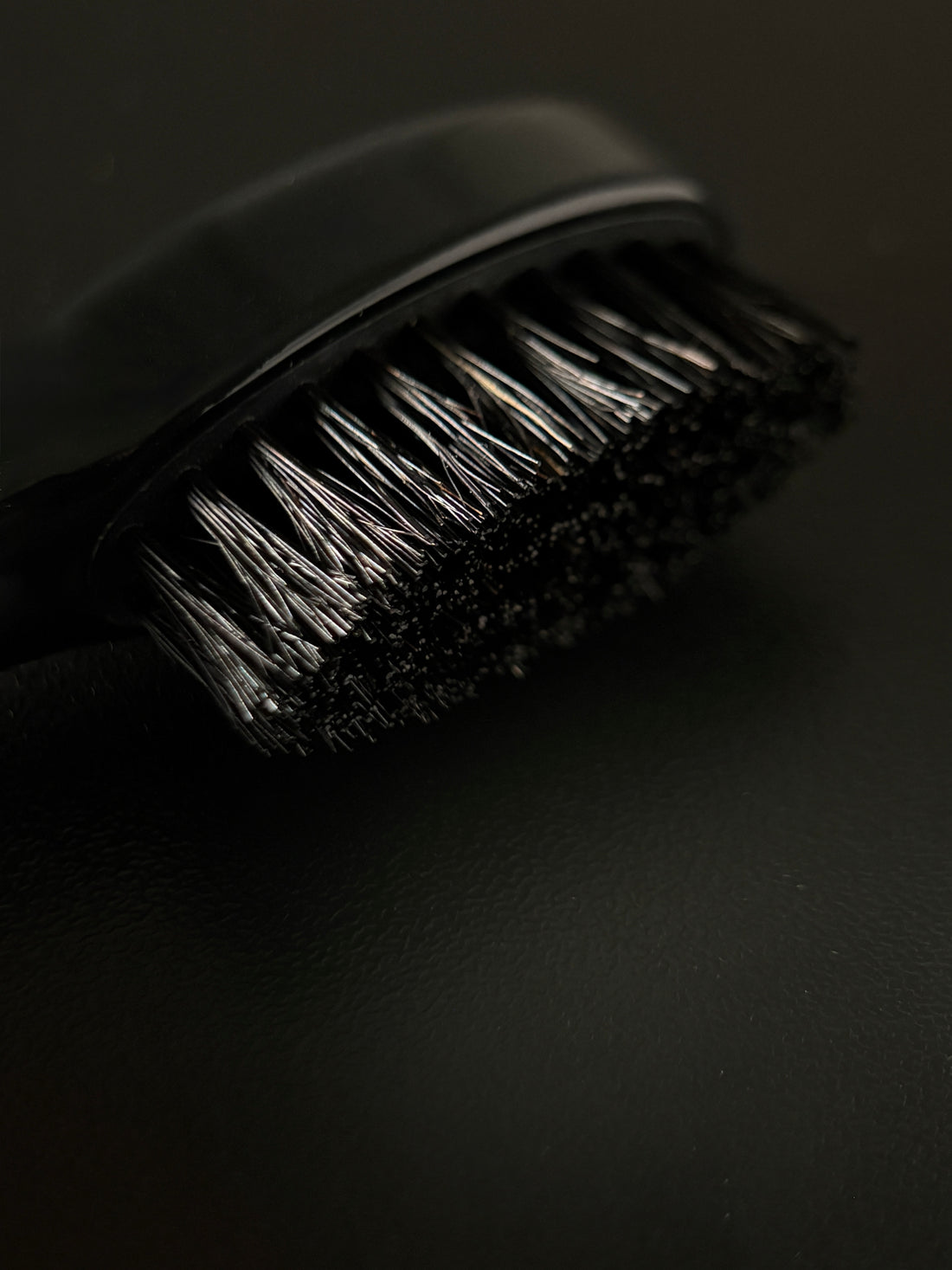
Bristle
First-cut natural boar bristle.
First-cut refers to the first shearing of the animal. These are the longest, strongest fibers, taken before any regrowth, and they are the smallest and most sought-after portion of the yield. Each bristle is naturally tapered, thick at the base and fine at the tip, so it can move a coarse mustache hair and still glide through without tearing. Boar bristle is keratin, the same protein as the hair it grooms, so it carries your mustache's own oils from root to tip instead of stripping them. Barbers settled on boar more than a century ago and never had a reason to leave it. Synthetic bristle is more uniform, and does none of this.
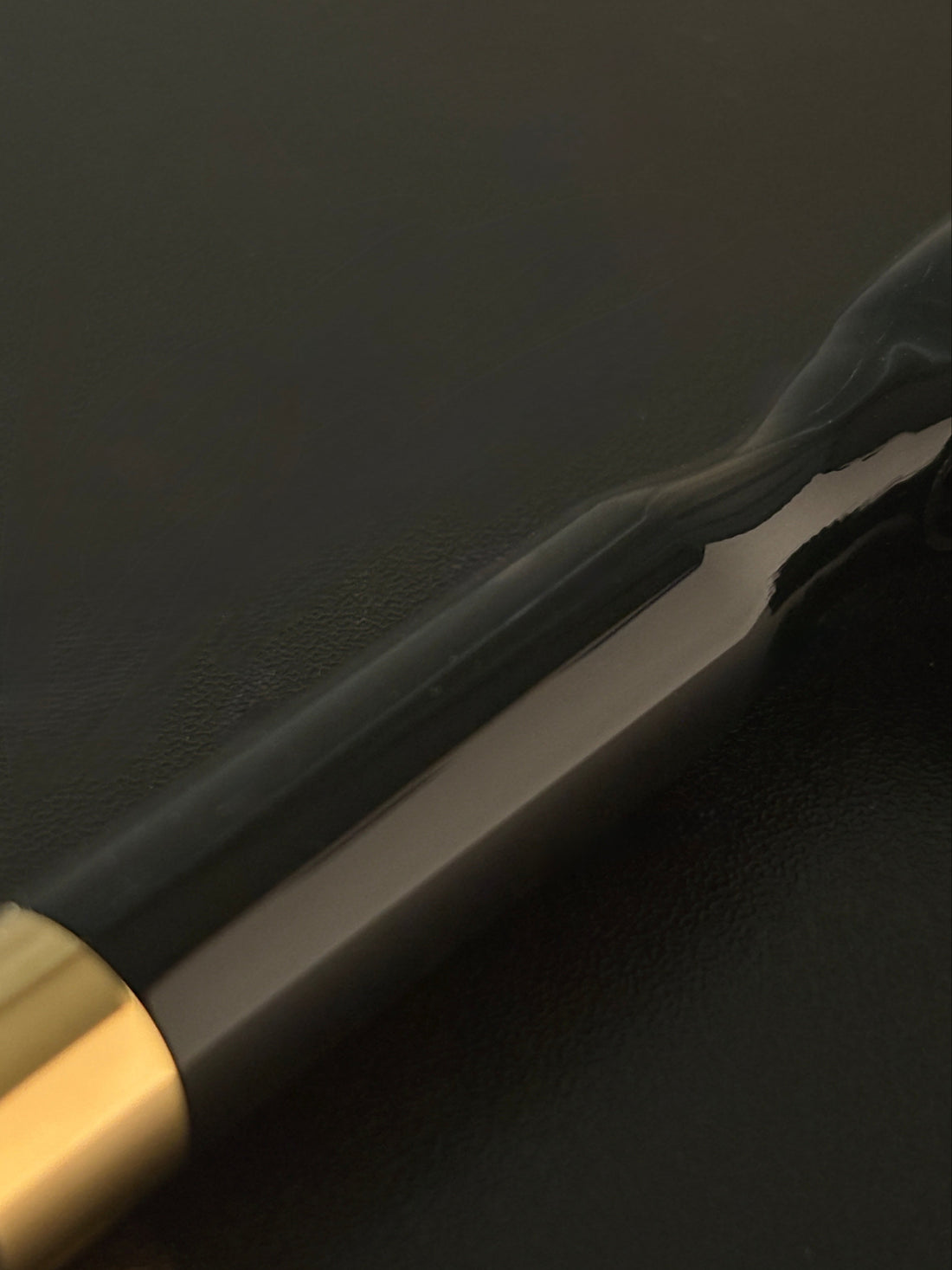
Handle
Cast acrylic.
Cast acrylic is poured into molds and cured slowly, over hours. Extruded acrylic is forced through a die in seconds. The difference shows in density, optical depth and how the surface takes a polish, which is why cast acrylic is the material of museum vitrines, aquarium windows and the barrels of good fountain pens. It does not swell in a humid bathroom, warp or cloud with age. The weight is deliberate, paired with a contoured silhouette, so the brush sits properly in the hand and stays where you set it down.
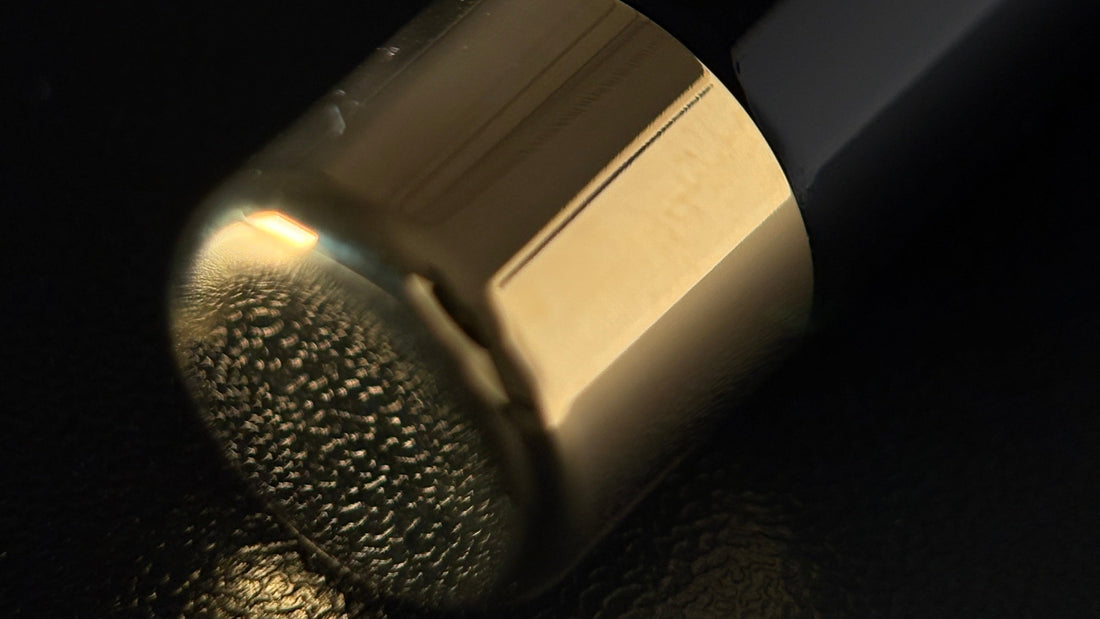
End cap
Unlacquered C360 brass, designed to patina with use.
The cap is C360 brass, the free-machining alloy specified where a part must be cut precisely and hold its edges. Sixty-one percent copper, roughly three percent lead, the balance zinc. It belongs to the same family of alloys used for marine fittings, sextants, compass housings and instrument keys, chosen because it resists corrosion and can be worked to a fine tolerance and stay that way.
Most brass is lacquered. A clear coat is sprayed over it to lock the color in place, and it works until it doesn't. The coating eventually chips, and the metal beneath oxidizes unevenly into blotches. Lacquer is not protection. It is postponement.
This cap is left bare on purpose. It will darken where your fingers rest and stay bright where they don't. That is not damage. It is what happens to a leather chair after twenty years of use, or a baseball glove broken in properly. The object stops looking new and starts looking like yours.
Evidence of a life lived.
- Title
- Ochre Mustache Brush
- Designed in
- Saint Petersburg, Florida
- Handle
- Cast acrylic
- Bristle
- First-cut natural boar, five rows
- End cap
- Unlacquered C360 brass
- Overall length
- Four inches
- Configuration
- One size, one finish, one configuration
Ochre Mustache Brush
Free shipping within the United States